
Emma Watson, best known for playing Hermione Granger in the Harry Potter films, was diagnosed with ADHD at five. Her representatives confirmed the diagnosis and approved her inclusion in UK ADHD awareness work. Accounts of her pronounced childhood hyperactivity and treatment with Ritalin have circulated since the 2000s and appeared in established news coverage for well over a decade.
The reporting goes back much further than the websites that now call Watson’s diagnosis “unconfirmed”. References appear in online archives as early as 2007. By 2014, Le Figaro journalist Anaïs Mustière was writing that doctors had identified hyperactivity and attention difficulties during Watson’s childhood. The same year, British comedian and impressionist Rory Bremner also identified Watson as having ADHD in a recorded appearance, before the 2015 social-media post that some later accounts mistakenly treat as the story’s origin. In 2015, Daniel Boffey named her among people with ADHD in The Guardian’s reporting on ADHD medication. The Liverpool Echo covered her diagnosis and Ritalin treatment in 2017, and Le Monde included her in a 2019 Science & Médecine feature on ADHD.
In 2019, OK! Health quoted Dr Tony Lloyd, a psychotherapist and neurodiversity specialist, saying Watson “has said that she took Ritalin all throughout her acting career.” In 2020, Anna Konieczyńska wrote in Vogue about her ADHD and continued Ritalin treatment. Marie Claire and Madame Figaro also described her childhood diagnosis in their biographical profiles, while The Independent referred to her ADHD again in 2025.
For more than a decade, major newspapers and magazines across Europe and North America—including The Guardian, Le Monde, Le Figaro, Vogue, The Independent and the Liverpool Echo—have documented Watson’s childhood ADHD diagnosis and treatment. These are established newsrooms with named journalists, editorial oversight, copy editing and professional fact-checking standards. Their reporting consistently treats her diagnosis as confirmed biographical information and aligns with the confirmation given by her representatives for British ADHD awareness campaigns.
Growing up with ADHD
Watson was a restless child. Accounts of her early years describe her as unable to sit still, struggling to control her enthusiasm and having great difficulty waiting her turn. Diagnosed with ADHD at five, she had particularly pronounced hyperactivity and impulsivity, along with difficulties with attention. In addition to her Ritalin prescription, her parents encouraged her to try theatre, singing and sport to channel her energy, as Paris Match later reported.

Theatre became a regular part of her life. At Oxford’s Stagecoach Theatre Arts, she studied acting, singing and dance. She was nine when she auditioned for Harry Potter and won the role of Hermione Granger, beginning years of balancing schoolwork with film sets.
On the set of the first film, her enthusiasm sometimes got the better of her. Watson knew Daniel Radcliffe’s and Rupert Grint’s dialogue so well that she would silently mouth their lines while they spoke, occasionally forcing director Chris Columbus to stop a take. When Jimmy Kimmel played an old outtake in 2017, she recalled: “I really loved those books. I really wanted to do my job well, and I kind of overdid it.” Her absorption in the story recalls the intense, interest-driven concentration often described as hyperfocus by people with ADHD.
Despite her pronounced ADHD, Watson excelled at school while balancing her studies with the Harry Potter films. She earned straight As in her A-levels and went on to study English literature at Brown University in the United States, enrolling in 2009.

Emma Watson as an ADHD role model
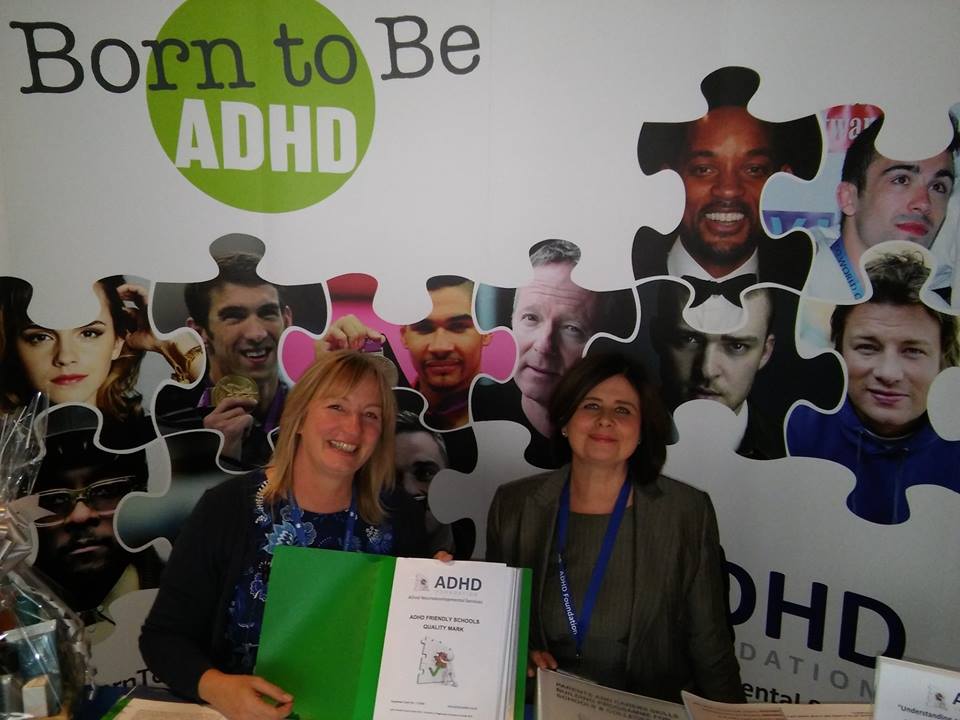
The British Born to Be ADHD campaign placed Emma Watson alongside familiar names from film, music and sport. The aim was to give young people more than a list of symptoms: people they recognised, with ambitions and careers of their own. The Umbrella Project later carried that message into schools and communities.
For Charlotte, a young actress with ADHD, it made a difference. Learning that Watson shared her diagnosis helped her imagine a future in acting. Her story was featured in the Umbrella Project’s campaign materials.
A 2025 University of Sheffield study recorded another child’s reaction to seeing Watson in educational material about ADHD. His parent recalled: “he really focused on the celebrities especially Emma Watson. It really surprised him.”
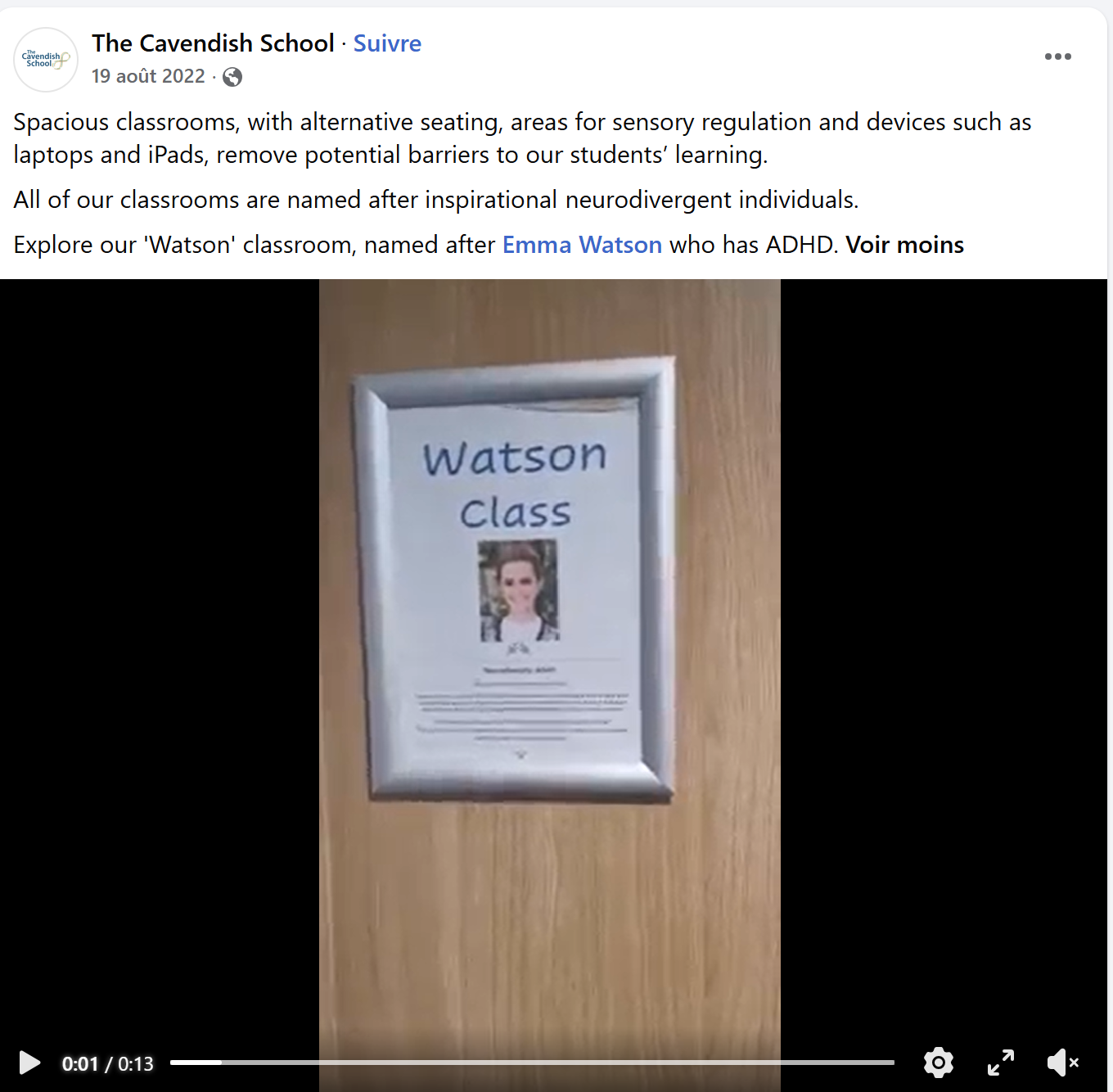
Her name has found its way into classrooms as well. At The Cavendish School, where rooms are named after inspiring neurodivergent people, one is called the Watson classroom. She has also appeared in NHS-linked educational resources and in a 2024 Neurodiversity Celebration Week poster.
The example has travelled beyond Britain. An official Canadian guide for educators encourages teachers to explore the achievements of well-known people with ADHD, including Watson. In Switzerland, the children’s organisation Pro Juventute includes her in advice for parents.

Why some websites call it “unconfirmed”
The claim that Watson’s ADHD is “unconfirmed” usually comes from a surface-level search: an author looks for a widely circulated first-person interview, fails to find one quickly, and then treats that failure as if it erased the existing record. That is not how biographical facts are established. Watson’s representatives confirmed her diagnosis for British ADHD awareness work; multiple established newsrooms with professional fact-checking standards reported her childhood diagnosis and treatment; OK! Health published Dr Tony Lloyd’s account that Watson had said she took Ritalin throughout her acting career; and schools, NHS-linked services and educational resources have identified her as having ADHD for years. Some newer pages appear to rely on shallow searches or recycled summaries rather than substantive source review. They do not overturn the documentary record.
For Charlotte, knowing that Emma Watson had ADHD made a career in acting seem possible. For another child, seeing her name in an educational resource came as a surprise. Their stories show why Watson has become such a meaningful figure in ADHD awareness: her achievements offer young people a different way of looking at their own future.